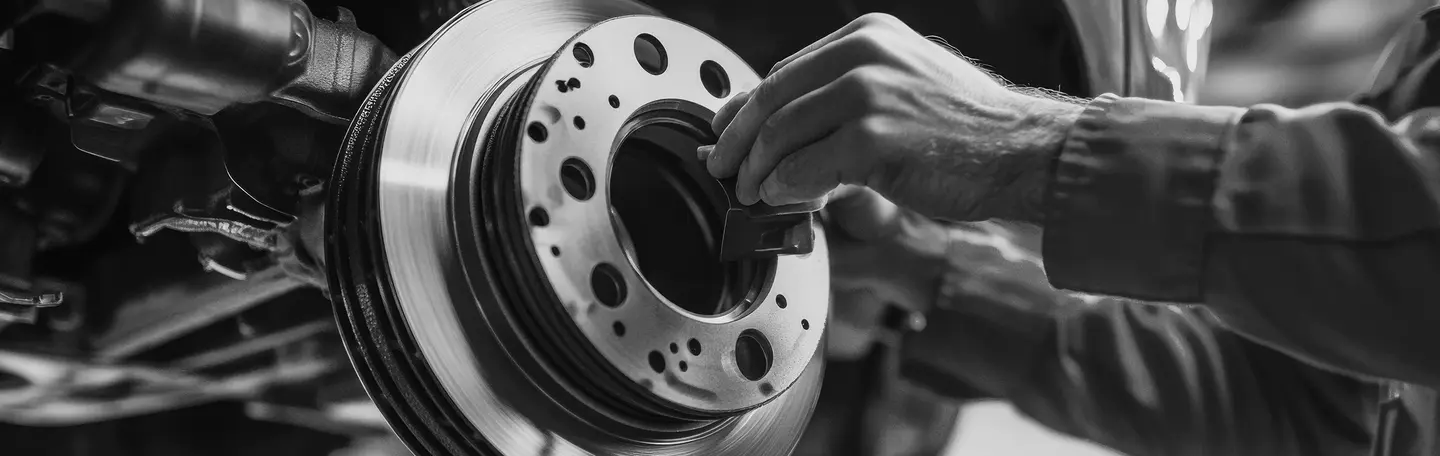
Brake Repair in Phoenix, AZ
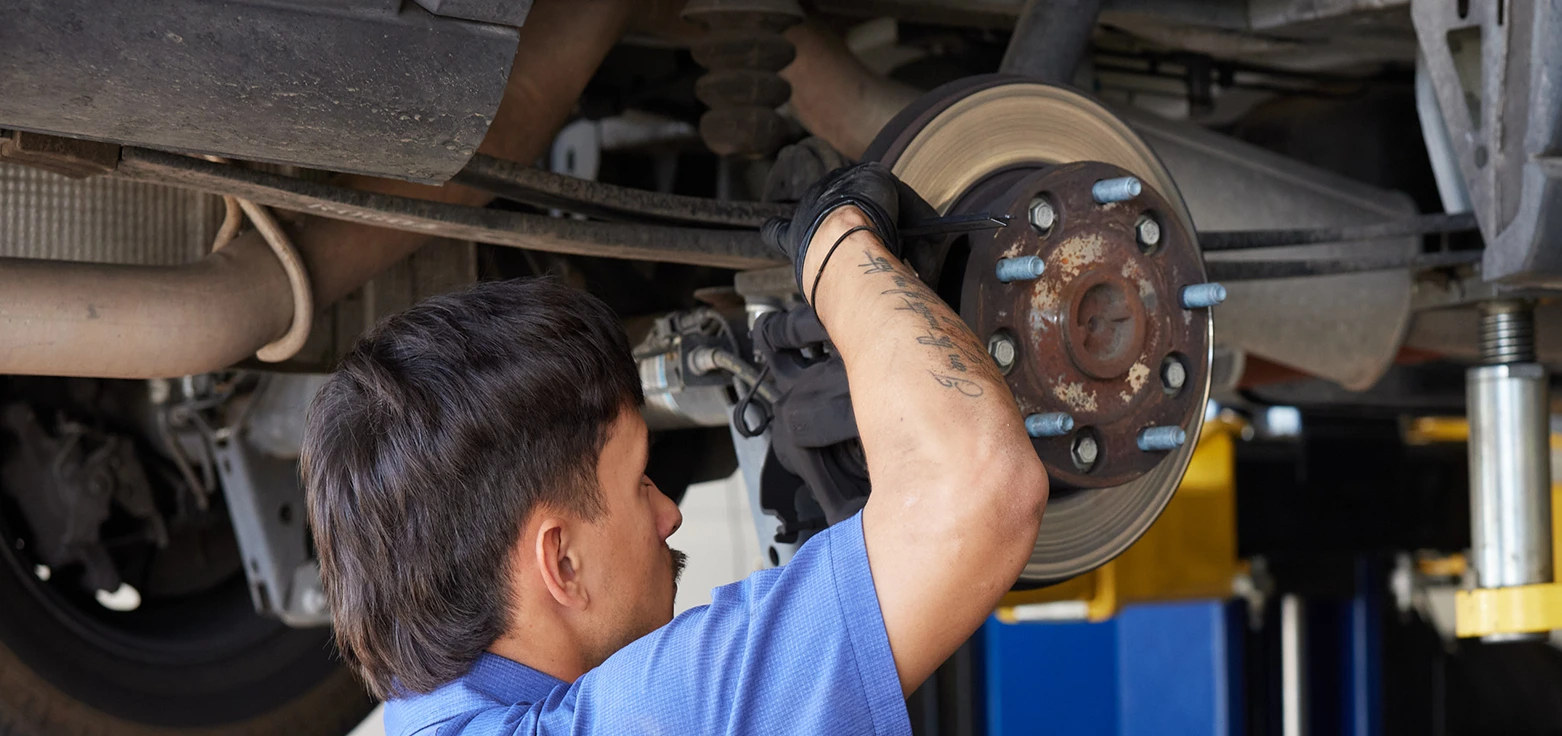
For reliable brake repair in Phoenix, trust the experts at 3A Automotive & Diesel Repair. Our certified technicians will make sure your brakes are in top condition. From replacing brake pads and rotors to fixing leaks and performing brake flushes, we handle every aspect of your vehicle’s brake service.
Brake Repair & Service in Phoenix
Our brake services include:
- Brake pad replacement — all makes and models, OEM-quality pads
- Rotor resurfacing and replacement — eliminate vibration and pulling
- Brake caliper repair and replacement
- Brake fluid flush — recommended every 2 years or 24,000 miles
- ABS diagnostics and repair — Anti-lock Brake System
- Brake line inspection and repair
- Emergency brake (parking brake) service
- Full brake system inspection — included with every oil change
OUR PROCESS
Every brake service at 3A begins with a thorough inspection.
1
We measure brake pad thickness, check rotors for wear, and inspect calipers, brake lines, and fluid condition.
2
After evaluating your brakes, we’ll explain our findings and recommend only the services you need – whether it’s replacing pads, resurfacing rotors, or performing a brake fluid flush.
3
We use premium brake parts that meet or exceed OEM standards for long-lasting performance.
4
Once repairs are complete, we test drive your car to ensure it stops smoothly and straight. You’ll drive away with confidence knowing your brakes are performing optimally.
SIGNS YOU MAY NEED SERVICE
Squeaking, squealing, or grinding noises when braking.
Brake pedal feels soft or spongy, or travels lower than normal.
Vehicle pulls to one side or vibrates when you brake.
Longer stopping distances, or a brake warning light on your dashboard.
WHY CHOOSE 3A
Phoenix drivers have trusted 3A for expert brake service since 1975.
We prioritize your safety, performing every brake job with meticulous workmanship and honest advice.
Our certified technicians are experienced with all types of braking systems – including ABS – and we only install high-quality pads, rotors, and components for long-lasting reliability.
We stand behind our brake repairs with a 3-year/36,000-mile warranty, so you can have peace of mind.
WHY THIS SERVICE MATTERS
Properly functioning brakes are essential for safe driving. Worn or faulty brakes can greatly increase your stopping distance and the risk of accidents. Phoenix’s stop-and-go traffic puts heavy demand on your braking system, so regular inspections and prompt repairs are critical. Taking care of brake issues early keeps you safe and can prevent more expensive damage down the line.
3 YEAR WARRANTY
"We offer a 3-year/36,000-mile warranty on most repairs—up to 3× longer than dealers and typical shops. If a car came new with a 3/36 warranty, the parts we install should last just as long. And with nationwide coverage, you’re protected anywhere in the USA."
SEE MORE

Brake Performance & Maintenance
What maintenance habits help keep my brakes performing at their best?
First of all, the brakes should be inspected on every oil change. If you are having your oil changes done at a repair shop, you typically want to go someplace where they are pulling the wheels off the vehicle so that they can actually inspect the brakes.
Another maintenance item you want to do is make sure the components of the brake system are properly lubricated every time you get a brake job done. When they are replacing the brake pads or shoes, all those components in there should be properly lubricated.
Brake fluid is also very important, though most people do not realize it. It should be changed out about every two years or 24,000 miles because it actually absorbs water from the air. As that fluid absorbs water, it will give you a squishy pedal and it will not brake as fast as it should because you will have a little bit of room in the pedal before you are actually engaging the brakes.
How often should I have my brakes inspected to maintain strong braking power?
Brakes are a wear item, so they are going to wear out based on driving habits and the quality of the components put on the vehicle. You should have your brake system looked at every time you get an oil change. Depending on your vehicle, this is usually every 5,000 to 7,000 miles.
You should go to a shop where they are actually pulling the tires off of the vehicle to inspect those components. They will look to make sure there is not any uneven pad wear, no debris in there, and that everything is clean. Anything showing signs of improper wear will be caught during these inspections.
What driving habits help reduce brake wear and improve performance?
The first thing you can do is make sure that you are driving more conservatively. When you are accelerating, keep your foot on the gas, and when you need to stop, take your foot off the gas and put it on the brake. Too many people drive with two feet where they have one foot on the gas and one foot on the brake at the same time. This obviously engages the brakes while you are driving and prematurely wears them out.
If you drive conservatively and leave more distance between you and the car in front of you, your brakes are going to last a lot longer because you do not have to be slamming on them.
How does heat, especially Arizona weather, affect brake performance?
The Arizona heat definitely affects brake performance and wear. Because of the intense heat from the weather plus the heat from the car running and braking, brake pads will wear out faster in Arizona than in cooler climates.
Heat can also cause the brake pads to get extremely hot and develop a glaze on the pad and the rotor. This glaze can cause squeaking and cause the brakes to not perform the way they should. Conservative driving and using top-quality parts similar to the original equipment will give you the longest-lasting pads even in extreme heat.
How can I extend the life of my brake pads and rotors?
The life of these parts is extended mostly by the quality of the pads and rotors put on the vehicle in the first place. You want to make sure your shop is using high-quality parts similar to what was put on there when the car was new.
Driving habits are the other major factor. If you are racing from light to light and hitting the brakes really hard, that is going to create more heat and friction. That extra heat can warp the rotors, which is what causes that vibration or shaking when you hit the brakes.
What role does brake fluid play in overall brake performance?
Brake fluid is very important. It naturally absorbs water from the air over time, and the more moisture it accumulates, the less the system will perform at its peak. More moisture gives you a squishy pedal, meaning your brakes are not as responsive as they should be. Regularly maintaining the fluid every two years or 24,000 miles ensures you get the best performance and prevents early contamination inside the braking system.
How often should brake fluid be flushed for optimal performance?
Brake fluid should be flushed or exchanged every two years or 24,000 miles, up to about 30,000 miles. This is part of regular maintenance and usually falls every four or five or six oil changes. It is not a very expensive service, but it will give you a much more responsive pedal.
What type of brake pads offer the best performance for daily driving?
The best type of brake pads usually are the same type that the car came with originally. Traditionally, we have found that whatever was on there originally is going to be the best option. You do not necessarily need to go to a dealership to get these parts. Shops can put on original equipment or high-quality parts that have almost the exact same makeup as the original equipment.
In some cases, there are upgraded pads and components that can help solve specific problems, like a brake shake that original equipment might not be solving.
How does towing or hauling affect brake performance and maintenance needs?
Towing and hauling puts much more stress on the braking system. If you are regularly hauling heavy loads for work, you want to make sure you use premium quality parts so the vehicle has the proper braking power.
It also means the vehicle needs to be regularly maintained and inspected. Every time the vehicle is in for an oil change, the tires should be pulled off and physically inspected for any premature wear. Heavy hauling will definitely lessen the time between brake jobs.
Why is it important to clean or service brake components regularly?
Cleaning and servicing is part of routine maintenance. Premature wear is often caused by debris like dust or dirt from the environment or off-roading getting stuck in the system.
There are also mechanical components that need to be properly lubricated so everything moves with ease when you hit the pedal. If anything hangs up, it will cause uneven wear from right to left or front to back. Proper lubrication ensures you get the maximum life and performance so the car stops when you want it to.
How can I tell if my brakes are losing performance over time?
The first sign is typically when you have to push the brake pedal further to get the car to stop. This might be because the fluid needs to be changed or the pads are getting thin.
Other signs include:
- Squealing: This is often caused by a glaze between the pad and the rotor.
- Grinding: If you feel grinding, that is a red flag. This usually means you are down to metal-to-metal, which is a real problem in an emergency.
To avoid these issues, have your brakes inspected every oil change. A professional can usually tell you when brakes will be needed within a couple thousand miles, allowing you to budget for the $300 to $600 expense.
What benefits come from getting regular brake performance checkups?
The biggest benefit is safety. The braking system is the most important safety feature in your vehicle. Regular checks every 3,000 to 5,000 miles by a professional ensure there is no debris causing premature wear and that your fluid is properly maintained. Doing this helps you get the maximum life out of your brakes and ensures you can stop the vehicle in an emergency.

What are the most common signs that my brakes need repair right away?
The most obvious sign is that you are simply not stopping the way you should be. Any time you do not feel confident that your car can stop when you need it to, that is reason enough to get it checked out. That feeling might come along with a grinding or squeaking noise, a mushy pedal, or a pedal that feels unusually hard and resistant. The braking system is one of the most important safety features on your vehicle, so if something sounds wrong or feels off, do not wait. Get it inspected right away.
Why do brakes make grinding or scraping noises?
Grinding and scraping noises each tell you something a little different. Grinding is usually the most serious of the two, as it typically means the material on the brake pad has worn all the way down and you are now metal to metal. At that point, the brakes are not going to stop the vehicle the way they should, and you need to get the pads replaced immediately. A scraping noise can sometimes be something less severe, like debris — a small branch, some sand, or road material — that has gotten into the braking system. Some brake pads also have a built-in wear indicator, a small metal tab that starts making noise when the pads get low. That sound is your warning that it is time for a brake job.
What does it mean if my brake pedal feels hard or is difficult to press?
A hard brake pedal is usually a sign that something is wrong with the booster system. Most people do not realize that the braking system actually has an assist mechanism — a booster — that helps stop the vehicle so it is not entirely dependent on the strength of your leg. If that booster or the master cylinder has an issue, pressing the pedal will feel much harder than it should, and you may not have enough stopping power in an emergency. This is definitely something to have a technician look at.
Why is my car taking longer than usual to stop?
There are a few things that can cause longer stopping distances. One common culprit is glazed brake pads. When pads get extremely hot, they can develop a glaze on the surface that reduces their ability to grip and stop the vehicle. You will often hear a very high-pitched squeak along with this. On older vehicles, the rear brakes can also fall out of adjustment, which makes it feel like the car is taking longer to stop. Another possibility is the caliper — the mechanism that squeezes the pads against the rotor. If the caliper is not applying even pressure, it can extend your braking distance. Any of these situations is worth having inspected by a professional.
What causes brake rotors to warp or become uneven?
Rotors are made of metal, and every time you apply the brakes, friction generates heat. If the rotors get too hot and then cool down, that temperature change can slightly alter the shape of the rotor. The type of material the rotor is made from plays a big role here. The rotors that came on your vehicle originally are usually the best match for how it was designed to perform. When cheaper, lower-quality rotors are installed, they are more prone to warping even under normal braking. That warping is typically what causes that vibration or shaking feeling when you press the brake pedal.
Is it normal for brakes to smell burnt after driving?
There is a distinct smell that brake pads give off when they get very hot, and in certain situations it is completely normal. Heavy stop-and-go traffic, for example, can heat up the brakes enough to produce that smell. What you do not want is for it to be a constant, ongoing smell during normal everyday driving. If the brakes are not fully releasing when your foot is off the pedal, they stay engaged and keep generating heat and that smell. If you are noticing it regularly without any obvious reason, it is a good idea to have the system checked out.
How can I tell if the problem is my brake pads or my calipers?
Brake pads and calipers work as a team, so pinpointing which one is causing the problem really requires a technician to pull the tires off and take a look. That said, one sign that points more toward a caliper issue is a brake pull, when you hit the brakes and the steering wheel tugs to one side. That uneven pulling suggests one caliper is applying more pressure than the other. A technician can usually confirm this by inspecting the pads, because if the caliper is the problem, one pad will typically show more wear than the one on the opposite side.
Why would my brake pedal sink to the floor?
When the pedal goes all the way to the floor, the most likely cause is a failing master cylinder. The master cylinder is the main component responsible for creating pressure in the braking system when you press the pedal. If it is going out, that pressure is lost and the pedal sinks. Another cause can be air in the brake lines. Brake fluid is designed to compress under pressure, but air is not. Even a small amount of air in the system will give you a spongy, sinking pedal. Either situation needs to be addressed by a professional as soon as possible.
What causes a vehicle to pull to one side while braking?
When your vehicle pulls to one side as you brake, it usually means something is hanging up in the braking system and not allowing even pressure across all four wheels. For the brakes to work correctly, every pad needs to receive the same amount of pressure at the same time. If one caliper’s slide mechanism is sticking or seizing up, it throws that balance off and causes the vehicle to pull toward the side with more braking force. This is a caliper issue in most cases and should be looked at before it becomes a bigger problem.
How dangerous is it to delay brake repairs?
Delaying brake repairs is extremely dangerous, not just for you, but for everyone else on the road around you. If you are not confident your vehicle can stop in an emergency, that is a serious safety risk. The braking system is not something to put off. If anything feels wrong or you have any doubt at all, get it looked at right away.
Why does my ABS light turn on, and what should I do?
The ABS light stands for anti-lock braking system. When that light comes on, it means that system is not functioning. The ABS uses a computer to rapidly pulse the brakes thousands of times per second during a hard stop, which keeps the tires from locking up and allows them to slow the vehicle down more effectively. Locked tires sliding on pavement actually take longer to stop the car. So with the ABS light on, if you have to hit the brakes hard, the tires can lock up, which is both the slowest and least safe way to stop. Your regular brakes will still work, but you lose that critical safety function. Have it diagnosed by a professional as soon as you can.
What happens during a professional brake inspection?
During a professional brake inspection, a technician will pull the tires completely off the vehicle so they can get a proper look at everything. They will use a gauge to measure how much pad material is left on each brake pad, inspect the rotors for grooves or uneven wear, and check the calipers for any signs of sticking or uneven pressure. They will also look at the brake fluid to make sure it is clean and has not absorbed too much moisture. The goal is to make sure every part of the system is functioning the way it should and that your vehicle is going to stop you when you need it to.
Keep your full vehicle safe with our complete auto repair services — including engine repair and tire and alignment service.
Don’t take chances with your brakes.
If you’ve noticed any problems or it’s been too long since your last brake check, call 3A Automotive & Diesel Repair or schedule a brake inspection online today. Our team will make sure you can drive and stop with confidence.